The main reason to buy a Sub-Zero is the way it keeps food. Classic and PRO Series refrigerators cool the fresh-food side and the freezer with separate systems, so produce stays moist, ice does not taste of last week’s fish, and each compartment holds its own setting. Add a cabinet that sits flush with the cabinetry and a machine meant to be repaired for decades rather than swapped out. The same design explains what owners later search for: a fridge that warms while the freezer stays hard, an ice maker that seems lazy, a grille that needs cleaning.
Two cooling systems instead of one
A typical refrigerator chills both compartments from one coil behind the freezer and blows some of that dry, cold air into the fresh-food side, pulling moisture from vegetables and carrying odors into the ice. Sub-Zero calls its alternative Dual Refrigeration. The Classic Series guide describes two individual systems that keep fresh-food smells out of frozen food and ice and leave the refrigerator air humid. PRO Series units use three separate controls, so the refrigerator, its drawers and the freezer each get their own temperature, set from two touch displays on the grille.
The flip side shows up on service calls. Because each compartment has its own system, one can falter while the other runs fine. A warm refrigerator above a rock-solid freezer points to the fresh-food side’s own fan, coil, sensor or control, not the whole appliance.
Count the compressors in the model number
Sub-Zero model numbers are meant to be read. Leading letters name the product line, such as CL for Classic or DET for Designer; the digits give the width, such as 30 or 36; trailing letters cover panel type, door style and dispensers. On older 200 and 300 Series combination units, count the 1s: a 361RFD runs one compressor and one temperature control, a 3211RFD runs two of each, and model 211 breaks the rule with one.
In March 2019 the Built-In line became Classic and Integrated became Designer, while PRO kept its name. Legacy Classic (BI) units date from 2008 to 2022; the current Classic (CL) series began in 2022. On over-and-under models the serial tag, inside the refrigerator door near the top hinge, lists the model, serial number, manufacture date and refrigerant type. Note it before calling anyone, since parts differ between generations.
The ice maker is patient on purpose
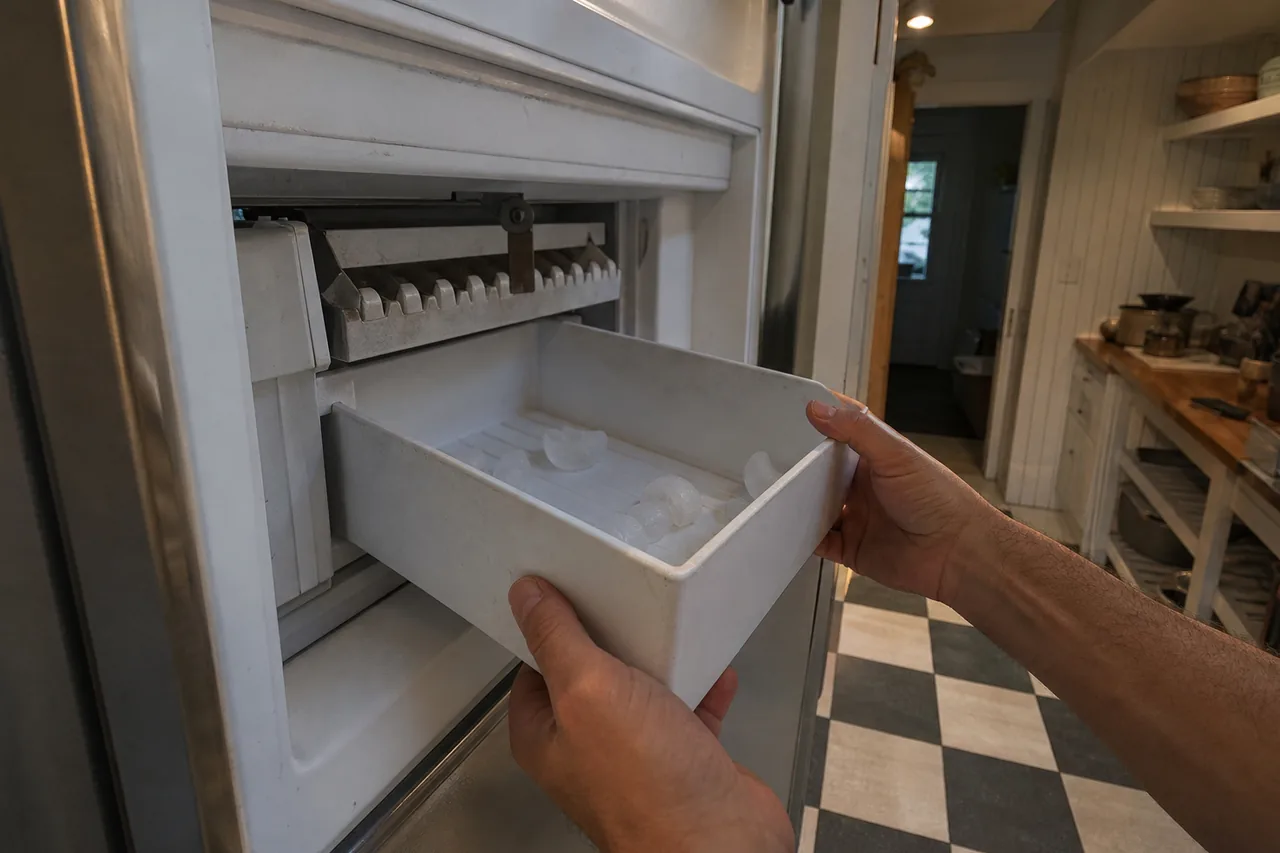
The ice maker inside a Sub-Zero freezer is modest. It makes 64 to 96 cubes a day, dropping roughly 8 cubes (4.6 oz) every 2 to 3 hours, stops once the bin is full, and can need 2 days to fill an empty bin after a move or a cleaning. Many calls about a dead ice maker are really about that pace. Give it a full day with the water on; if the tray never harvests, the water valve or supply line is the usual suspect, as the ice maker repair page explains. Hosts who need more often add a UC-15I undercounter ice maker, which produces up to 50 lb a day and stores up to 25 lb.
Why the grille and gaskets matter in a built-in
A built-in sits flush with the cabinets, so it cannot shed heat from its back and sides like a freestanding fridge. Air moves through the grille and across the condenser; when lint coats that coil, the compressor runs longer and the cabinet slowly warms. Vacuuming the grille area a few times a year helps, and condenser and airflow service handles deeper cleaning. In a humid Jacksonville kitchen, a door gasket that has lost its grip lets damp air in, showing up as sweat on the frame and frost on the freezer walls; the door seal page lists the signs.
The parts you replace and the parts you leave alone
Models with the air purification cartridge need a new one about once a year. It scrubs ethylene and odors from the air every 20 minutes with technology based on NASA research, and its small mercury lamp means the spent cartridge goes to proper disposal, not the kitchen trash. The sealed system is a different story: current Sub-Zero guides warn of a flammable refrigerant that only technicians trained for it may handle.
Repair math for a long-lived machine
These refrigerators are built to be kept running. A compressor or sealed-system repair typically lands in the $900–$2,340 range, and fan, gasket and control jobs come in lower; the firm figure follows an $80 diagnostic. A replacement unit runs $8,600–$19,400, which is why fixing the one already framed into your cabinetry usually makes sense.